


一篇带你了解沙特历史 ! | 从远古王国到现代丝路,触摸沙特千年文明的温度
提起沙特阿拉伯,多数人脑海里浮现的,是无垠沙海、跳动的石油脉搏,或是圣城麦加的庄严剪影。其实这片占据阿拉伯半岛80%面积的土地,是人类文明的重要摇篮之一 ; 从12.5万年前人类迁徙的足迹,到伊斯兰教的诞生与传播,从古代王国的兴衰更迭,到现代王国的崛起,数千年的历史沉淀,都藏在一座座沉默的遗迹里,等待着被读懂。
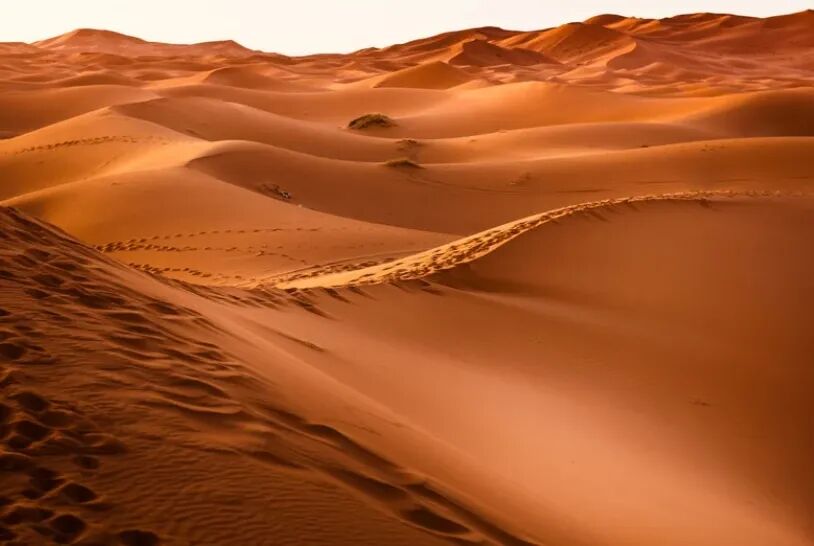
When people think of Saudi Arabia, most envision endless seas of sand, the pulsing rhythm of oil, or the solemn silhouette of the holy city of Mecca. In fact, this land, which occupies 80% of the Arabian Peninsula, is one of the crucial cradles of human civilization. From the footprints of human migration 125,000 years ago to the birth and spread of Islam, from the rise and fall of ancient kingdoms to the emergence of the modern nation, thousands of years of history lie buried within silent ruins, waiting to be understood.
01
远古曙光:文明的雏形,藏在沙漠深处的印记 (公元前130万年-公元5世纪) Dawn of Antiquity: The Cradle of Civilization, Imprints Hidden Deep in the Desert (1,300,000BCE – 5th Century CE)
早在130万年前,沙特的土地上就已有了人类活动的痕迹——北部与西南部地区出土的石制工具,和坦桑尼亚奥杜威峡谷的石器极为相似,据推测,这是非洲直立人向外迁徙时留下的印记,也让沙特成为人类跨洲迁徙路上的重要驿站。
As early as 1.3 million years ago, there were traces of human activities on the land of Saudi Arabia — the stone tools unearthed in the northern and southwestern regions are very similar to those in the Olduvai Gorge in Tanzania. It is speculated that these are the marks left by Homo erectus migrating from Africa, making Saudi Arabia an important stop on the road of early human intercontinental migration.
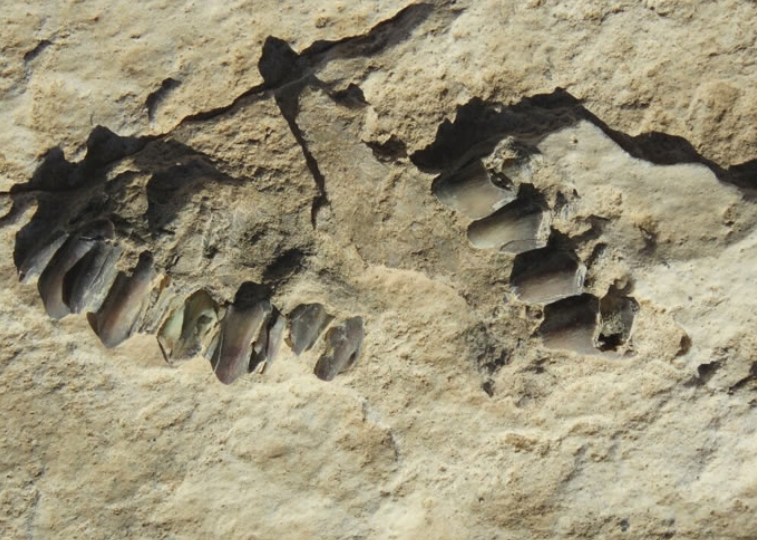
沙特北部泰布克地区发现12万多年前的人类和动物足迹化石
In the Tabuk region of northern Saudi Arabia, fossilized human and animal footprints dating back over 120,000 years have been discovered.
时间来到公元前8810年左右,马嘉地区的荒原上,出现了石制动物雕像与磨制石器,其中栩栩如生的石马遗迹,改写了人类驯马史——这里被证实可能是世界上最早驯化马的地区之一,比此前公认的中亚驯马时间还要早。想象一下,远古先民在这片土地上,牵着驯化的马匹,在绿洲旁耕作、放牧,用石器搭建居所,为沙特文明埋下了第一颗种子。
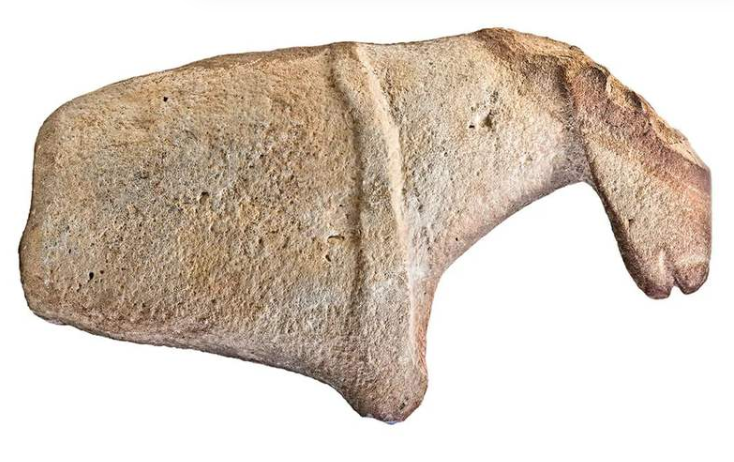
石马残件 新石器时代 约公元前8810年 沙特国家博物馆藏
Fragment of a Stone Horse, Neolithic period,Saudi National Museum.
Around 8810 BC, stone animal statues and polished stone tools appeared on the wasteland of the Majardah area. Among them, the lifelike stone horse relics rewritten the history of human horse domestication — this place has been proven to be one of the earliest regions in the world to domesticate horses, earlier than the previously recognized horse domestication time in Central Asia. Imagine that ancient ancestors, leading domesticated horses on this land, cultivated and grazed beside oases, built dwellings with stone tools, and sowed the first seed of Saudi civilization.
02
贸易路上的王国传奇(公元前5000年-公元前6世纪)
公元前5000年起,沙特地区逐渐摆脱了原始的游牧状态,依托贯穿东西方的香料之路,一个个古代文明与王国相继崛起,成为连接欧亚非三大洲的贸易枢纽,也留下了无数震撼人心的遗迹。
Starting from 5000 BC, the Saudi region gradually got rid of the primitive nomadic state. Relying on the Incense Route running through the East and the West, several ancient civilizations and kingdoms emerged one after another, becoming an important trade hub connecting the three continents of Europe, Asia and Africa, and leaving countless stunning relics.
“公元前5300年至公元前3800年,东北部的塔鲁特岛上,迪尔蒙文明悄然兴起。岛上出土的奥贝德陶器,见证了美索不达米亚人的迁徙足迹——他们带着先进的陶器制作技术来到这里,与当地先民交融,开启了两地数千年的贸易往来,塔鲁特岛也成为连接美索不达米亚与东方地区的重要纽带,商船在这里停靠,香料、陶器、丝绸源源不断地流转。
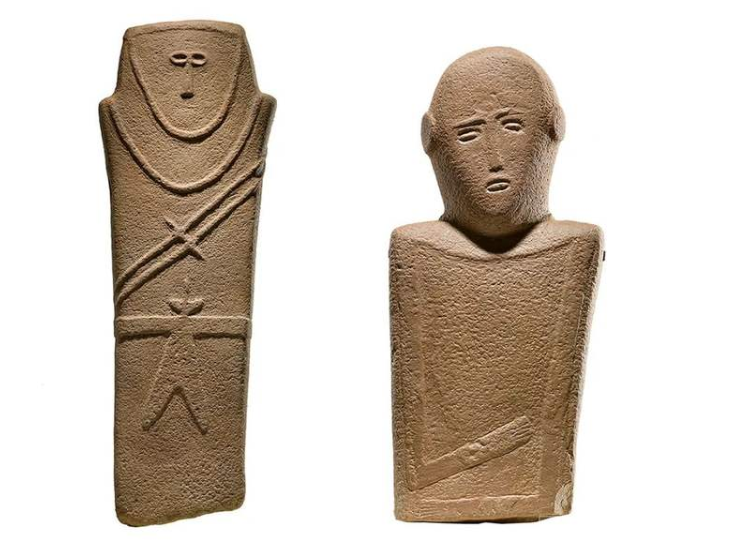
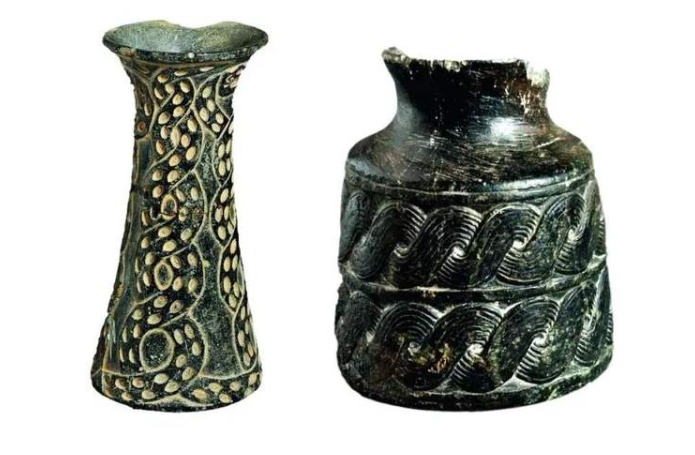
左 人形石碑 公元前4000年-公元前3000年
Left: Anthropomorphic Stela 4000–3000 BCE
(这些石碑是阿拉伯半岛迄今发现的最早最著名的代表性古代人类遗物
These stelae are the earliest and most renowned representative ancient human artifacts discovered to date in the Arabian Peninsula.)
右 蛇纹锥形瓶 石瓶 公元前3500年-公元前3000年
Right:Serpentine Conical Vessel / Stone Vessel 3500–3000 BCE
From 5300 BC to 3800 BC, the Dilmun Civilization quietly emerged on Tarut Island in the northeast. The Ubaid pottery unearthed on the island witnessed the migration of the Mesopotamians — they brought advanced pottery making technology here, integrated with the local ancestors, and started thousands of years of trade between the two regions. Tarut Island also became an important link connecting Mesopotamia and the East, where merchant ships docked, and spices, pottery and silk flowed continuously.
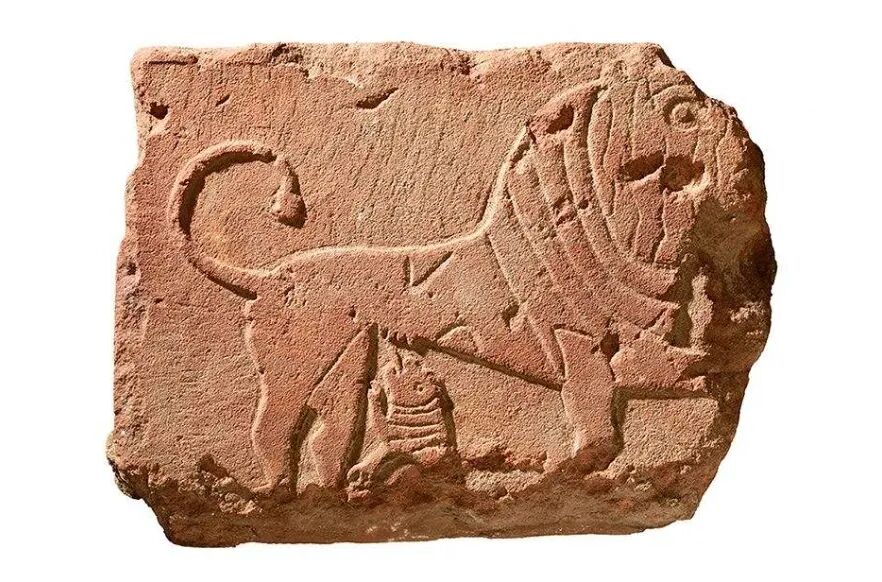
母狮哺乳狮崽石浮雕 欧拉出土,公元前6~前4世纪
Stone Relief of a Lioness Suckling Her CubExcavated at AlUla, 6th–4th century BCE
“到了公元前2000年末至公元前1世纪,泰马绿洲成为香料之路上的关键节点,它连接了阿拉伯南部和地中海东部、叙利亚、美索不达米亚和埃及。这片早在公元前4000年末就有人类定居的绿洲,出土的叙利亚-黎凡特式样青铜武器,诉说着这里频繁的跨地区交流;
而邻近的德丹王国,凭借驼队贸易迅速繁荣,成为名副其实的“驼队王国”,后来被里西安部落统治,留存至今的大量古阿拉伯碑文,成为解读这段历史的密码。
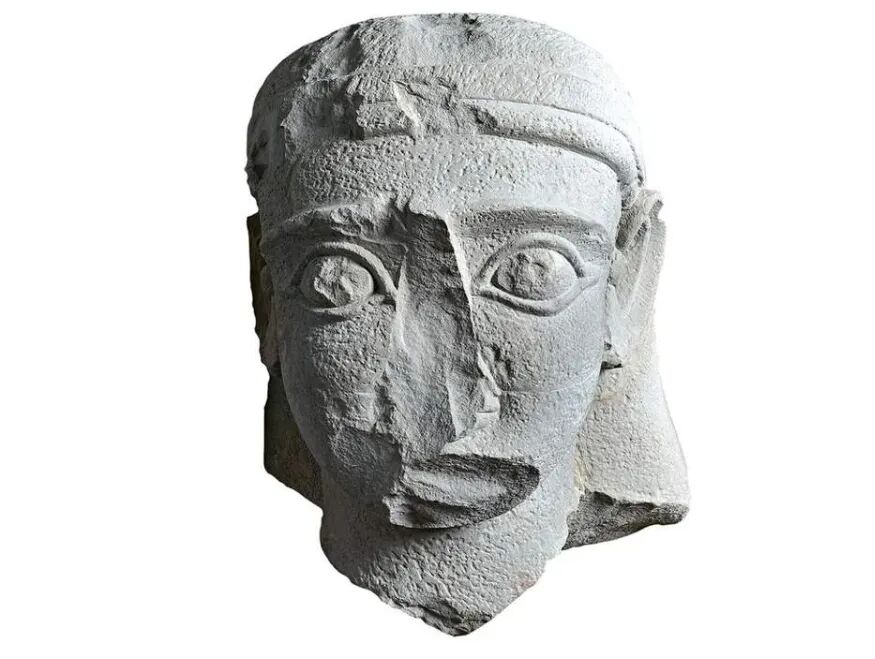
石雕头像,泰马出土,公元前4世纪~前2世纪,泰马博物馆藏
Stone Sculpture of a Head , Excavated at Tayma, 4th–2nd century BCETayma Museum
By the late 2000 BC to the 1st century BC, the Tayma Oasis became a key node on the Incense Route , It connected southern Arabia with the eastern Mediterranean, Syria, Mesopotamia, and Egypt.
This oasis, which has been inhabited by humans since the late 4000 BC, has unearthed Syrian-Levantine style bronze weapons, telling the story of frequent cross-regional exchanges here; the nearby Dedan Kingdom, relying on camel caravan trade, prospered rapidly and became a veritable “Camel Caravan Kingdom”. Later, it was ruled by the Lihyanite tribe, and a large number of ancient Arabic inscriptions preserved to this day have become the key to interpreting this period of history.
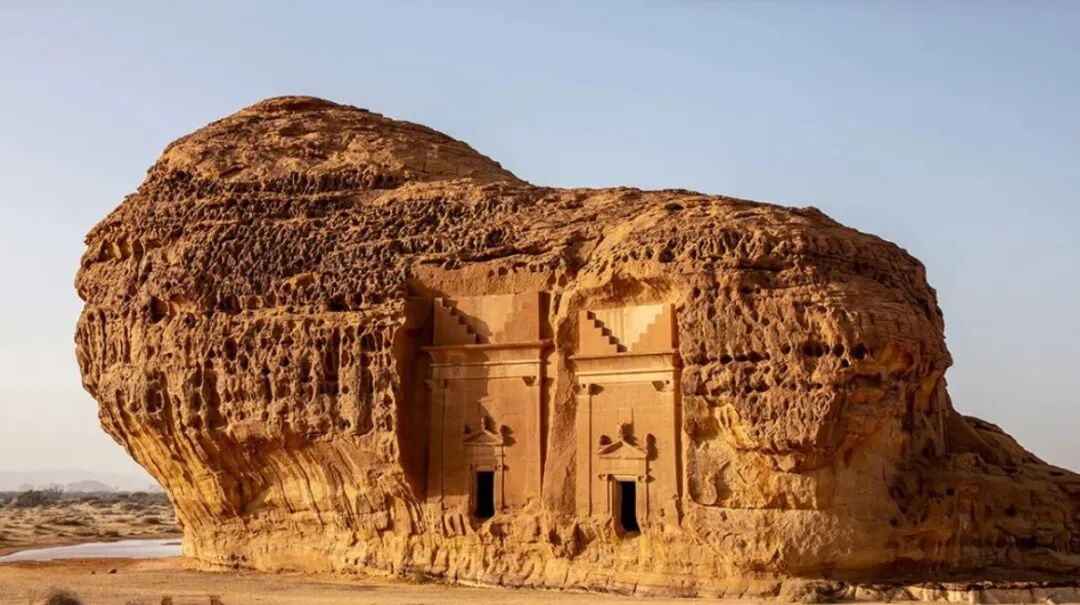
黑格拉(玛甸沙勒)单独矗立的巨型红岩陵墓:
116 座红岩陵墓密集凿刻在峭壁上,位于欧拉
Solitary Giant Red Sandstone Tomb of Hegra (Mada’in Salih): 116 tombs densely carved into cliffs, Al-Ula.
最令人震撼的,莫过于公元前3世纪至公元106年的纳巴泰王国遗迹——黑格拉(玛甸沙勒)。作为纳巴泰王国最南部的城市,这里是香料之路的重要站点,116座红岩陵墓被精心凿刻在峭壁之上,浮雕纹路清晰,铭文保存完好,每一座陵墓都是纳巴泰贵族财富与权力的象征。
2008年,黑格拉成为沙特首个世界遗产,站在这片红岩之上,仿佛还能听见当年商队的驼铃声,看见他们带着香料穿梭于陵墓之间的繁华景象。
The most stunning is the Nabatean Kingdom relics from the 3rd century BC to 106 AD — Hegra (Madain Saleh). As the southernmost city of the Nabatean Kingdom, it was an important station on the Incense Route. 116 red rock tombs were carefully chiseled on the cliffs, with clear relief patterns and well-preserved inscriptions. Each tomb is a symbol of the wealth and power of the Nabatean nobles. In 2008, Hegra became Saudi Arabia’s first World Heritage Site. Standing on this red rock, it seems that you can still hear the camel bells of the ancient caravans and see the prosperity of them shuttling between the tombs with spices.
03
圣城之光:重塑文明之光
公元7世纪,沙特迎来了历史上最具转折意义的时刻——伊斯兰教在这里诞生,不仅彻底改变了这片土地的命运,更重塑了世界文明的格局,麦加、麦地那、吉达三座城市,也因此成为伊斯兰世界的精神核心。
In the 7th century AD, Saudi Arabia ushered in the most pivotal moment in its history — Islam was born here, which not only completely changed the fate of this land, but also reshaped the pattern of world civilization. Mecca, Medina and Jeddah also became the spiritual cores of the Islamic world.
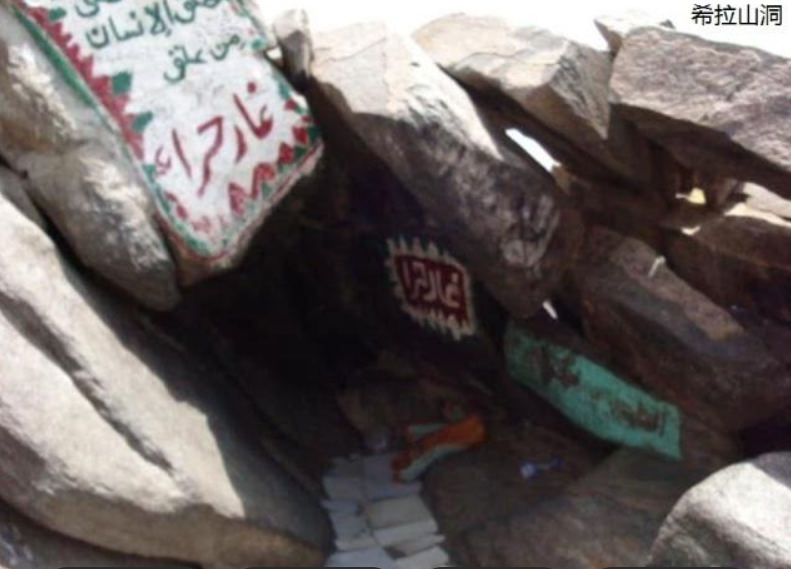
希拉山洞
Cave of Hira
位于沙特阿拉伯王国麦加城近郊4公里处的光明山腰
相传,公元610年40岁的伊斯兰先知穆罕默德在此山洞静修时,天使吉卜利勒将造物主安拉的启示(al-Wahy)传达给了穆罕默德,后被整理成《古兰经》传世。
Located on the mountainside of Jabal al-Nur, approximately 4 km from the city of Mecca in the Kingdom of Saudi Arabia.It is traditionally believed that in September 610 CE, the Prophet Muhammad, at the age of 40, was in retreat in this cave when the Angel Jibril (Gabriel) conveyed to him the revelation (al-Wahy) from Allah. These revelations were later compiled into the Qur’an.
公元610年,先知穆罕默德在麦加开始奉真主之命传播伊斯兰教,这座城市从此成为伊斯兰教的发源地。起初,传播之路充满艰辛,但穆罕默德的坚定与虔诚,让越来越多的人信仰伊斯兰教,麦加也逐渐成为穆斯林心中的圣地。
In 610 AD, the Prophet Muhammad began to spread Islam by the order of Allah in Mecca, which has since become the birthplace of Islam. At first, the road of dissemination was full of hardships, but Muhammad’s perseverance and piety made more and more people believe in Islam, and Mecca gradually became a holy place in the hearts of Muslims.
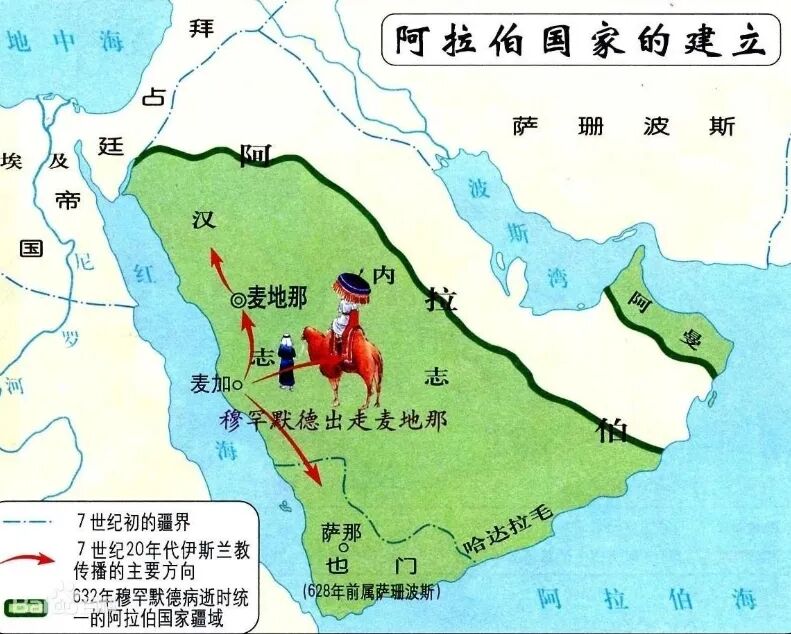
希吉莱迁徙 模拟图
Simulation Diagram of the Hijra
公元622年,为了躲避迫害,穆罕默德及其信徒从麦加迁徙至麦地那,这一事件被称为“希吉莱迁徙”,也是伊斯兰教历史上的重要转折点。在麦地那,穆罕默德建立了首个伊斯兰政权,制定了伊斯兰法律,麦地那也成为伊斯兰教的成长摇篮,先知寺在这里诞生,见证着伊斯兰教一步步发展壮大。
In 622 AD, to escape persecution, the Prophet Muhammad and his followers migrated from Mecca to Medina. This event is known as the “Hijra Migration” and is an important turning point in the history of Islam. In Medina, Muhammad established the first Islamic political power and formulated Islamic laws. Medina also became the cradle of the growth of Islam, where the Prophet’s Mosque was born, witnessing the gradual development and growth of Islam.
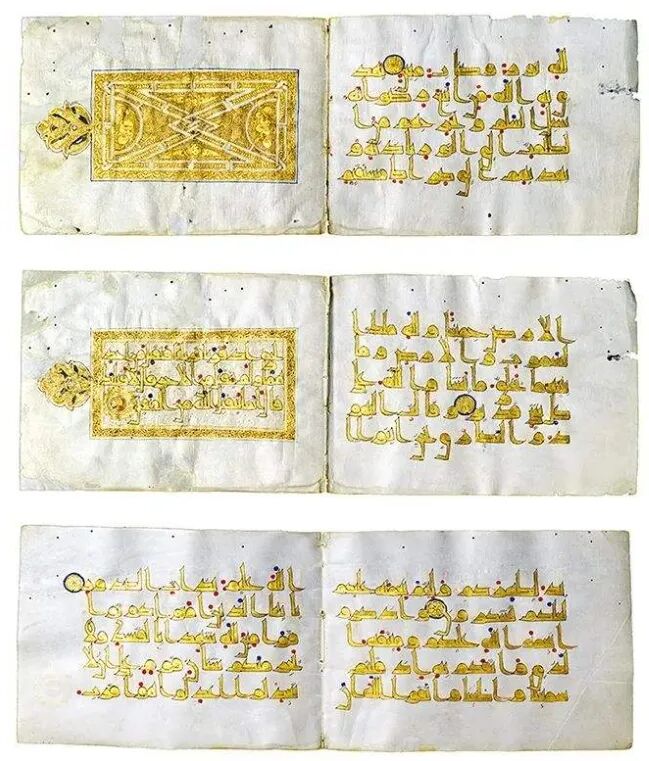
公元9世纪阿巴斯王朝时期《古兰经》残页 书写在羊皮纸上 ,可能制作于北非或中东地区,现藏于沙特国家博物馆
Folio from a Qur’an, Abbasid period, 9th century CE,written on parchment, possibly produced in North Africa or the Middle East. Saudi National Museum.
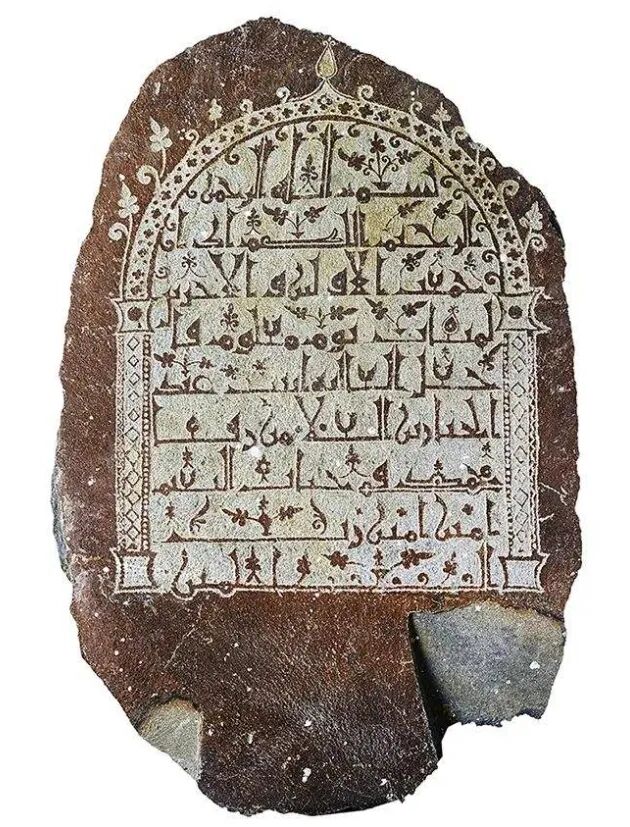
哈里亚墓碑,沙特国家博物馆藏
Tombstone of al-HāriyahSaudi National Museum
哈里亚墓碑”是一块公元9世纪出土于麦加、刻有墓主人姓名(哈里亚)及相关铭文的伊斯兰早期墓碑
The Tombstone of al-Hāriyah is an early Islamic tombstone dating from the 9th century CE, excavated in Mecca. It bears the name of the deceased (al-Hāriyah) along with relevant inscriptions.
现代交通出现之前,穆斯林前往麦加与麦地那朝圣,主要依托四条传统路线。其一为也门路线,自阿拉伯半岛西南部北上,是也门与非洲角朝圣者的必经之路。其二沿古代商道自大马士革南下,途经欧拉。其三来自埃及、北非与西班牙的朝圣者,多选择陆路穿越西奈半岛,此路在伊斯兰早期险象环生。各路线最终汇聚于圣地,见证着千年信仰之旅。
Before the advent of modern transportation, Muslims making the pilgrimage to the holy cities of Mecca and Medina mainly relied on four traditional routes. The first was the Yemeni route, which led northward from the southwestern part of the Arabian Peninsula and served as the essential path for pilgrims from Yemen and the Horn of Africa. The second followed ancient trade routes southward from Damascus, passing through AlUla. The third was taken by pilgrims from Egypt, North Africa, and Spain, who mostly traveled overland across the Sinai Peninsula—a route fraught with peril in the early Islamic period. These routes ultimately converged at the holy sites, bearing witness to a thousand years of faith and pilgrimage.
公元630年,穆罕默德率兵征服麦加,净化了克尔白(天房),将其定为穆斯林朝觐的核心圣地。这座立方体建筑被黑色幔帐覆盖,幔帐上绣着金色的《古兰经》经文,殿内的黑石,成为每一位穆斯林朝觐时必须亲吻的圣物。从此,麦加禁寺成为伊斯兰世界最神圣的场所之一,每年数百万穆斯林从世界各地奔赴这里,完成朝觐的神圣使命。
In 630 AD, Muhammad led his troops to conquer Mecca and purified the Kaaba, designating it as the core holy site for Muslim pilgrimage. This cubic building is covered with a black curtain embroidered with golden Quran verses, and the Black Stone inside the temple is a holy object that every Muslim must kiss during pilgrimage. Since then, the Masjid al-Haram in Mecca has become one of the most sacred places in the Islamic world, and millions of Muslims from all over the world come here every year to complete the sacred mission of pilgrimage.
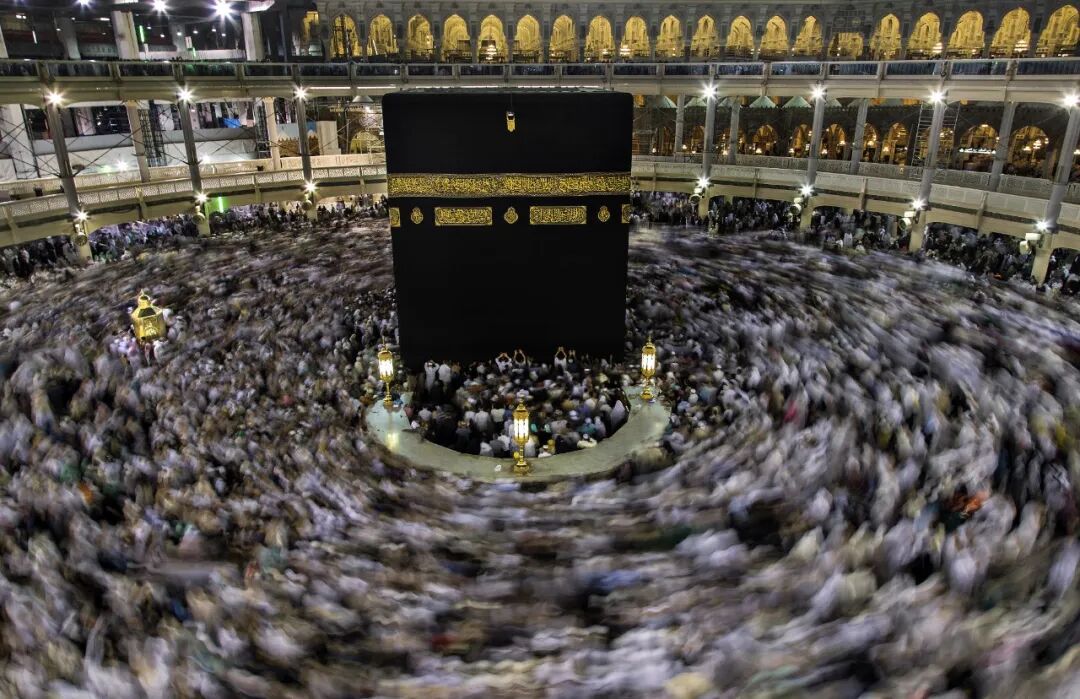
克尔白(天房)
Kaaba(the House of God)
从公元7世纪到15世纪,吉达老城也逐渐兴起。哈里发奥斯曼·本·阿凡将吉达指定为朝觐门户,来自世界各地的朝觐者与商人云集于此,让这座红海沿岸的港口城市,成为贸易与信仰的交汇之地。老城的珊瑚石建筑、独特的捕风塔,每一处细节都诉说着当年的繁华,直到今天,这里依然保留着当年的风貌,成为解读伊斯兰文明与贸易交融的活化石。
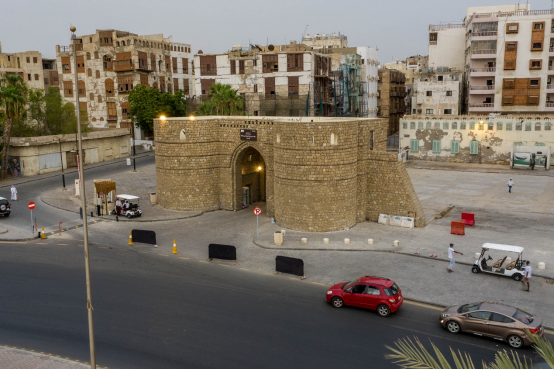
吉达老城 古城门遗址
Old City Gate of Jeddah
From the 7th century to the 15th century, Jeddah’s old town also gradually rose. Caliph Uthman ibn Affan designated Jeddah as a pilgrimage gateway. Pilgrims and merchants from all over the world gathered here, making this port city on the coast of the Red Sea a meeting place of trade and faith. The coral stone buildings and unique wind catchers in the old town tell the prosperity of the past in every detail. To this day, it still retains the style of that year, becoming a living fossil for interpreting the integration of Islamic civilization and trade.
04
王朝更迭,走向统一之路(18世纪-1931年)
时光流转至18世纪,沙特的历史进入了王朝更迭的动荡时期,沙特家族历经两次兴衰,在战火与纷争中,一步步走向统一,德拉伊耶古城、马斯马克宫等遗迹,成为这段波澜壮阔历史的见证者。
As time turned to the 18th century, Saudi Arabia’s history entered a turbulent period of dynastic changes. The Al Saud family experienced two ups and downs, and gradually moved towards unification in the flames of war and disputes. Relics such as Diriyah and Al-Masmak Palace became witnesses of this magnificent history.
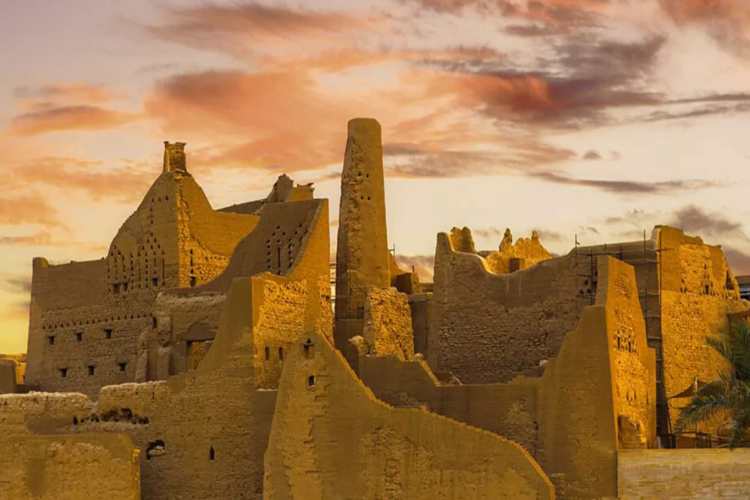
德拉伊耶古城遗址
Diriyah
1727年,伊玛目穆罕默德-本-沙特在德拉伊耶古城建立了第一沙特王国,并将这里定为首都。德拉伊耶作为沙特王朝的发祥地,留存着规模宏大的泥质建筑群落,每一座泥砖房屋都透着古朴的气息,见证着沙特家族的崛起。那时的德拉伊耶,是阿拉伯半岛的重要政治中心,也是宗教与文化的聚集地。
In 1727, Imam Muhammad bin Saud established the First Saudi State in Diriyah and made it the capital. As the birthplace of the Saudi dynasty, Diriyah retains a large-scale complex of adobe buildings, each adobe house exuding a simple atmosphere, witnessing the rise of the Al Saud family. At that time, Diriyah was an important political center of the Arabian Peninsula, as well as a gathering place of religion and culture.
然而好景不长,1818年,由于与奥斯曼帝国发生冲突,第一沙特王国被推翻,德拉伊耶古城遭到严重破坏,曾经的繁华褪去,只剩下残垣断壁,但这些留存的遗迹,依然在诉说着当年的辉煌与沧桑。
However, the good times did not last long. In 1818, due to conflicts with the Ottoman Empire, the First Saudi State was overthrown, and Diriyah was severely damaged. The former prosperity faded, leaving only ruins, but these remaining relics still tell the glory and vicissitudes of that year.
1824年,沙特家族的后裔不甘沉沦,重建了沙特王国,史称第二沙特王国,定都利雅得。但命运多舛,由于内部纷争不断,再加上外部势力的干预,第二沙特王国于1891年再度覆灭,沙特地区陷入了分裂与混乱之中。
In 1824, the descendants of the Al Saud family were unwilling to sink and re-established the Saudi Kingdom, known as the Second Saudi State in history, with Riyadh as the capital. But fate was ill-fated. Due to constant internal strife and external interference, the Second Saudi State fell again in 1891, and the Saudi region fell into division and chaos.
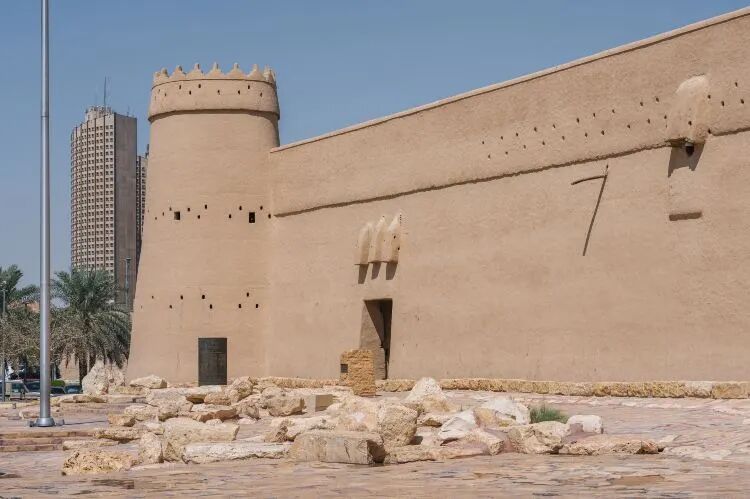
马斯马克堡垒遗址
Al Masmak Fortress
直到1902年,阿卜杜勒-阿齐兹(伊本·沙特)挺身而出,率领军队攻入利雅得,从拉希德家族手中收复了都城。他以马斯马克宫为据点,开始了统一沙特的艰难之路,马斯马克宫也因此成为沙特统一的象征,宫墙上的枪眼、斑驳的墙壁,都记录着当年的征战岁月。
It was not until 1902 that Abdulaziz (Ibn Saud) stepped forward, led his troops to capture Riyadh, and recaptured the capital from the Rashid family. Taking Al-Masmak Palace as a stronghold, he began the arduous road of unifying Saudi Arabia. Al-Masmak Palace thus became a symbol of Saudi unification. The bullet holes on the palace walls and the mottled walls all record the years of war.
05
现代新生:历史和繁华共生
1932年9月23日,阿卜杜勒-阿齐兹宣布统一汉志、内志、阿哈萨、阿西尔四个地区,定国名为“沙特阿拉伯王国”,定都利雅得,现代沙特正式诞生,一段新的历史就此开启。
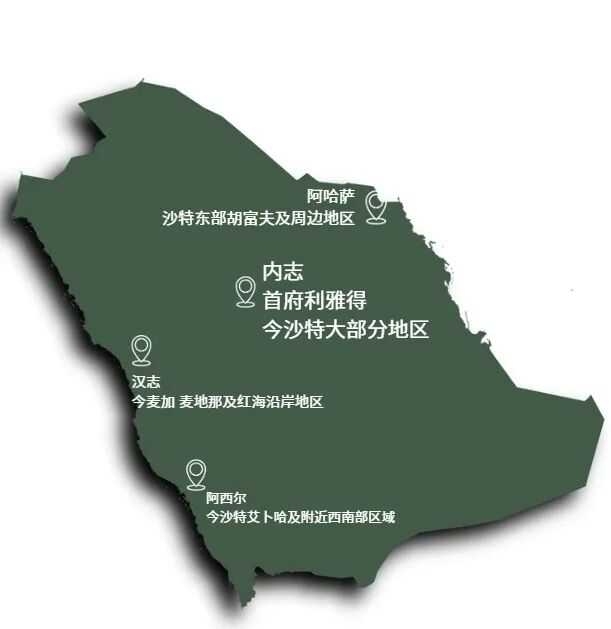
地区示意图
General Area Sketch Map
On September 23, 1932, Abdulaziz announced the unification of the four regions of Hejaz, Najd, Al-Ahsa and Asir, named the country the “Kingdom of Saudi Arabia”, and made Riyadh the capital. Modern Saudi Arabia was officially born, and a new chapter in history began.
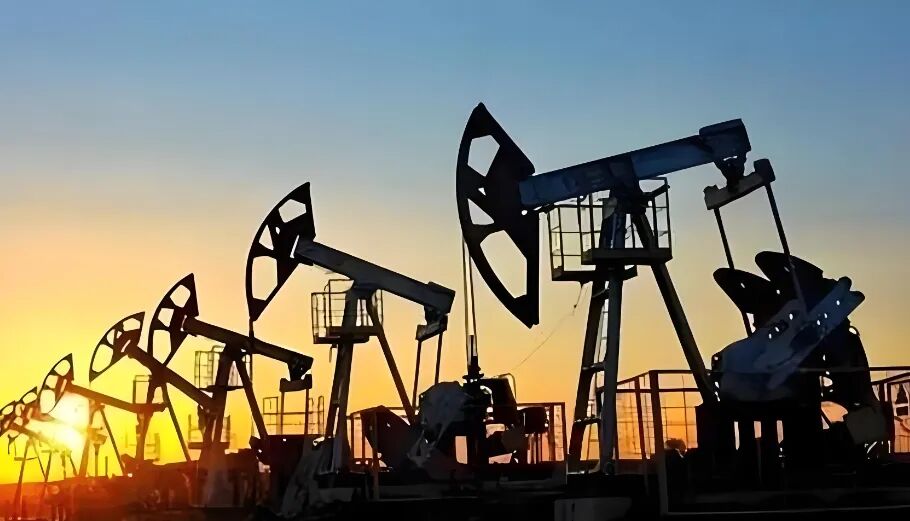
1938年,沙特东部达曼地区发现了石油,这是沙特第一口商业级油井,史称繁荣之井(Prosperity Well / Al-Khair Well),彻底改变沙特与世界能源格局。这一发现彻底改变了国家的经济格局,为沙特的现代化发展奠定了坚实基础。曾经的沙漠王国,凭借石油资源,迅速崛起为中东地区的重要国家,开启了工业化与现代化的进程。
In 1938, oil was discovered in the Dammam region of eastern Saudi Arabia. This was the country’s first commercial-grade oil well, historically known as Prosperity Well (Al-Khair Well), which fundamentally transformed the energy landscape of Saudi Arabia and the world. This discovery revolutionized the nation’s economic landscape and laid a solid foundation for Saudi Arabia’s modernization. Once a desert kingdom, Saudi Arabia rapidly rose as a key power in the Middle East by leveraging its oil resources, initiating a process of industrialization and modernization.
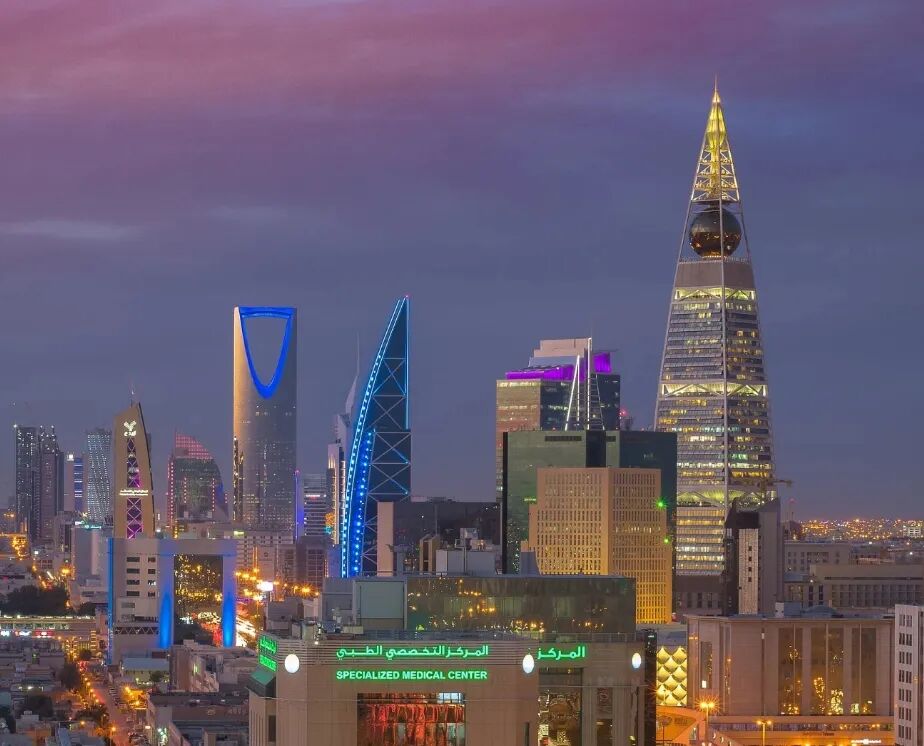
利雅得
Riyadh
如今,近百年过去,现代沙特早已不是人们印象中只有沙海与石油的模样,而是实现了历史遗迹与现代繁华的完美共生。首都利雅得,一边是图拉伊夫、马斯马克宫等千年遗迹,承载着沙特的过往;一边是王国中心等现代摩天楼,彰显着国家的发展与进步。
Today, nearly a hundred years later, modern Saudi Arabia is no longer just a desert and oil kingdom in people’s impression, but has achieved a perfect coexistence of historical relics and modern prosperity. The capital Riyadh, on the one hand, has thousand-year-old relics such as Turaif and Al-Masmak Palace, carrying Saudi Arabia’s past; on the other hand, it has modern skyscrapers such as the Kingdom Centre, showing the country’s development and progress.
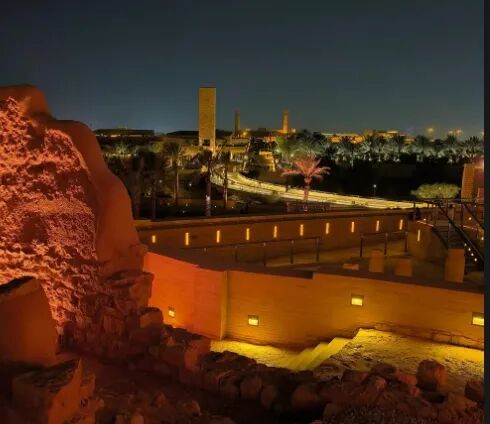
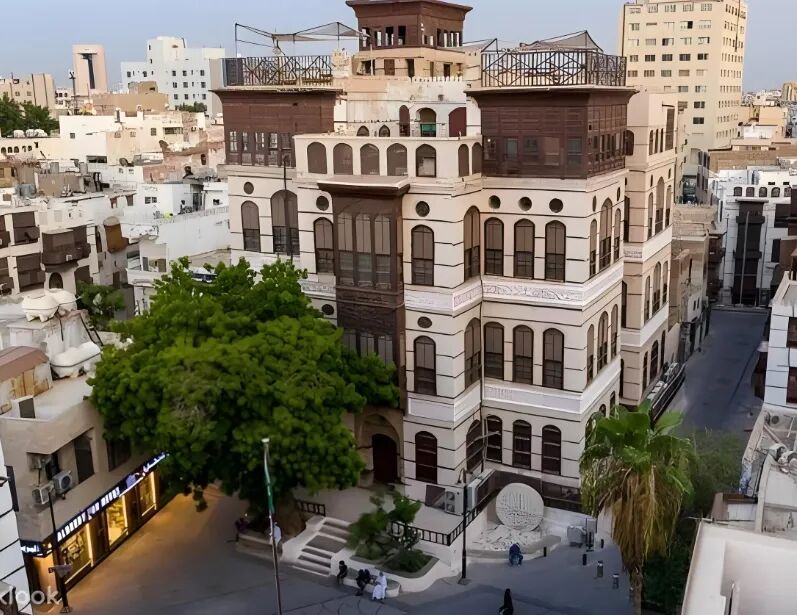
德拉伊耶古城夜景 吉达老城
Diriyah Old Town at Night
Jeddah Old Town (Al-Balad)
被修复的德拉伊耶古城,通过灯光秀与遗产步道,让千年泥质建筑重现生机,夜晚的古城,灯光照亮残垣断壁,仿佛穿越时光,与过去对话;黑格拉、吉达老城等遗迹被妥善保护,成为连接沙特过去与未来的纽带,让每一位来到这里的人,都能读懂这片土地的千年沧桑与现代活力。
The restored Diriyah, through light shows and heritage trails, has revived the thousand-year-old adobe buildings. At night, the ancient city is illuminated by lights, as if traveling through time to talk with the past; relics such as Hegra and Jeddah’s old town are properly protected, becoming a link connecting Saudi Arabia’s past and future, allowing everyone who comes here to understand the thousand-year vicissitudes and modern vitality of this land.
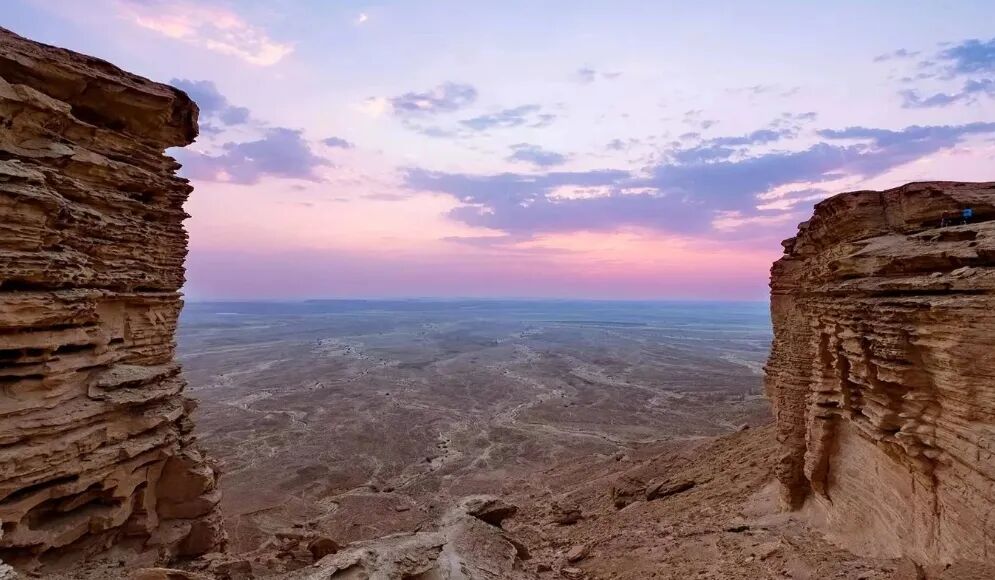
世界之崖
The Cliff of the World
当千年风沙拂过红岩陵墓,当圣城的祈祷声回荡在天际,沙特阿拉伯的每一步都藏着文明的回响。跟着我们,踏上这片沙海秘境,用脚步丈量历史,用双眼见证传奇,在遗迹与繁华之间,解锁属于你的沙特故事。
As the thousand-year sand blows over the red rock tombs, and the prayers of the holy cities echo across the sky, every step in Saudi Arabia holds the resonance of civilization. Follow us to embark on this desert secret, measure history with your feet, witness legends with your eyes, and unlock your own Saudi story between relics and prosperity.
(图源网络 侵删)