


Eid al-Adha in Saudi Arabia: Understanding the Middle East’s Grandest Religious Festival
When Saudi Arabia comes to mind, beyond the desert, the oil and the holy city of Mecca, nothing represents its religious and cultural core better than Eid al-Adha. One of the three great festivals of Islam and the grandest celebration of the Saudi year, it carries a thousand years of faith and, with it, the most unassuming hospitality and philosophy of life of the Saudi people.
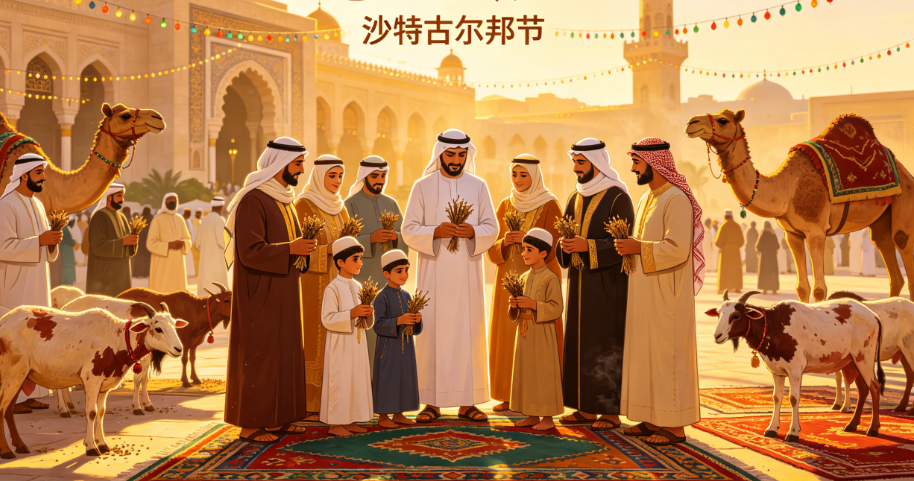
Whether you are planning a trip to Saudi Arabia, spending time with Saudi friends, or simply want to understand this observance shared by nearly 2 billion Muslims worldwide, this article will help you grasp the essentials quickly, steer clear of cultural taboos and understand the true meaning of Eid al-Adha.
Tracing Eid al-Adha: a thousand-year covenant of faith, sacrifice and benevolence
Eid al-Adha, also known as the “Festival of Sacrifice”, means “sacrifice and slaughter” in Arabic. It falls on the 10th day of the 12th month of the Islamic calendar, which coincides with the last day of the Hajj in Saudi Arabia. It is one of the four official annual celebrations of Saudi Arabia (the other three being Eid al-Fitr, National Day and Founding Day).
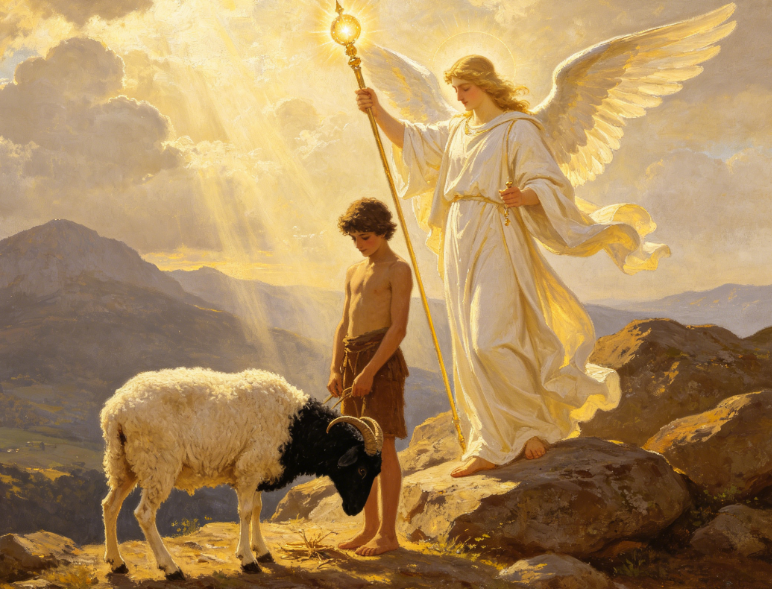
The festival traces back to a story of faith that shakes the soul: four thousand years ago, the Prophet Ibrahim (Abraham) dreamt on several nights in succession that God commanded him to sacrifice his beloved son Ismail (Ishmael) as a test of his devotion. Though his heart was breaking, Ibrahim chose to obey, and took his son to the valley of Mecca. At the instant the blade was about to fall, God witnessed his devotion and sent an angel with a black-headed ram to take the boy’s place. In this way the spiritual core of “obedience, trust and sacrifice” was established, and this day was set as Eid al-Adha, observed to this day.
For Saudis, Eid al-Adha is by no means simply a festive occasion. It is a discipline of practising faith and passing on goodwill, and its heart is “sacrifice and sharing” — a reminder to restrain greed and hold faith in reverence, while never forgetting to help those in need, so that everyone can share in the joy of the festival.
Core traditional rituals of Eid al-Adha in Saudi Arabia
As the birthplace of Islam, and home to the two holy cities of Mecca and Medina, the spiritual centre of Muslims the world over, Saudi Arabia has kept the most authentic traditions in its Eid al-Adha celebrations. Every rite carries deep cultural meaning, and they fall mainly into the following stages:
1. The Hajj and the stoning: faith put into practice at the highest level
The central ritual of Eid al-Adha is closely bound up with the Hajj. Every year at this time, millions of Muslims from around the world gather in Mecca to perform the last important duty of the pilgrimage — the stoning. Pilgrims go to Mina and, facing the pillars with Mecca on the left and Mina on the right, cast seven pebbles no bigger than a bean one after another, reciting “Allahu Akbar” with each throw, to symbolise resisting evil and holding fast to the faith. Those who are frail or unwell may have someone else cast the stones for them.
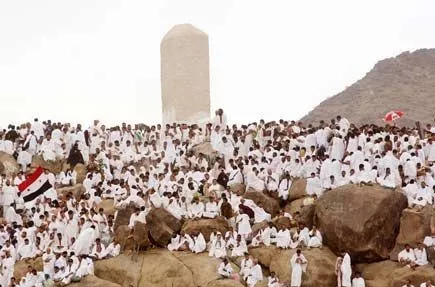
Once the stoning is over, pilgrims go on to the slaughterhouses of Mina to carry out the sacrifice and so complete the final duty of the Hajj. For many Muslims, taking part in the pilgrimage at Eid al-Adha in Mecca is the ambition of a lifetime.
2. Animal sacrifice: the sacred rite of sharing
Sacrifice is the most emblematic ritual of Eid al-Adha and the most direct expression of the spirit of offering. In Saudi Arabia, both pilgrims and ordinary families choose a healthy, sturdy animal on this day — mainly sheep, cattle and camels, with a sheep at least six months old, a goat one year, a cow two years and a camel five years — recite the name of God facing Mecca, and then slaughter it in memory of the devotion of the Prophet Ibrahim.
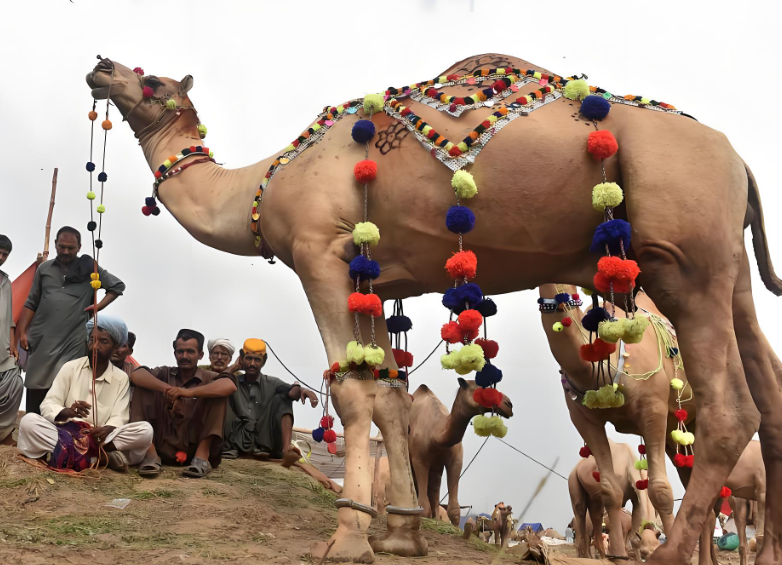
The meat of the sacrifice is divided under strict rules into three shares, none of which may be left out: one third is kept for the household, to share the blessings of the festival with the family; one third is given to relatives and friends, strengthening the bonds of neighbourhood and kinship; and one third goes to the poor, in keeping with the teaching that “the hungry should celebrate alongside the well-off”. This is the clearest expression of the spirit of sharing at Eid al-Adha — for Saudis, the joy of the festival is never something to enjoy alone, but something to share with everyone.
Saudi Arabia has also adopted more modern practices today. The government has set up standardised slaughter centres where people can book online and have the animal processed professionally, balancing hygiene with faith. Many also choose to convert the meat into cash donations for refugee children in conflict-affected regions, giving fresh life to the traditional spirit.
3. The Eid prayer and blessings: a solemn expression of faith
On the morning of Eid al-Adha, Saudi Muslims rise early, bathe and purify themselves, apply perfume (essential oils), and change into clean traditional dress — men wear the white thobe with the ghutra headscarf and the black igal cord, while women wear the loose black abaya and the hijab — as a sign of respect for the faith.
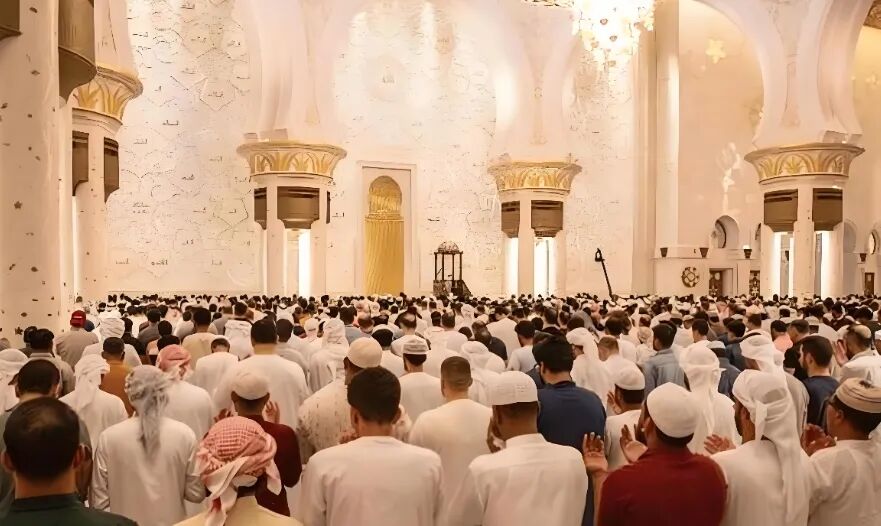
They then go to the mosque for the communal Eid prayer, where the imam delivers a sermon (the waelz) and the congregation recites scripture and prays together, asking for God’s forgiveness and grace. The occasion is deeply solemn. When the prayer ends, people embrace and greet one another, passing on good wishes for the festival in an atmosphere that is both sacred and warm.
4. The family feast: warmth around the table
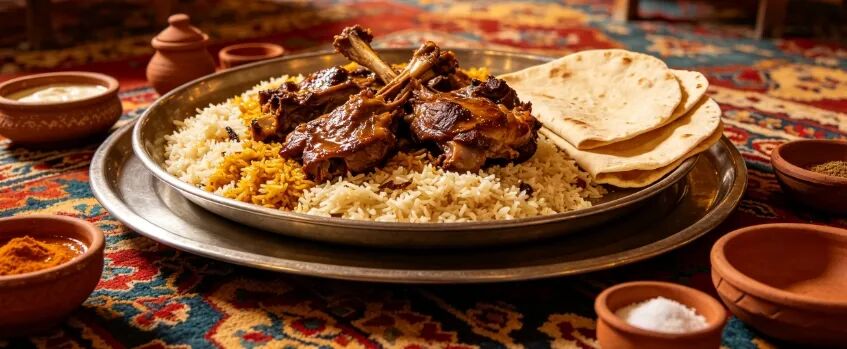
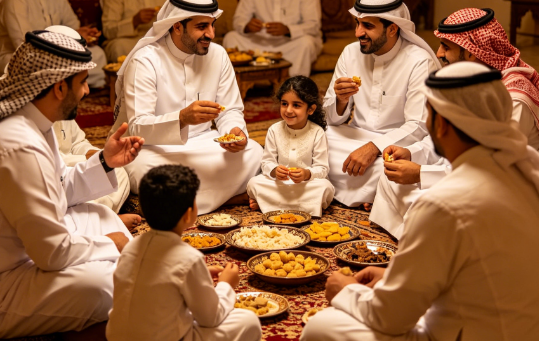
Eid al-Adha is also a homecoming festival for Saudis. Once the prayer and the sacrifice are done, every household lays on a generous feast and invites relatives and friends to gather. Preparations begin a week before: the men go early to the market to pick out a fat lamb, the undisputed star of the festive table, while the women prepare traditional dishes such as fried dough twists, baursak, pilaf (Polo), kabsa (spiced rice with lamb), mandi (slow-roasted lamb rice), together with Arabic coffee (gahwa) and dates — all indispensable to the holiday table.
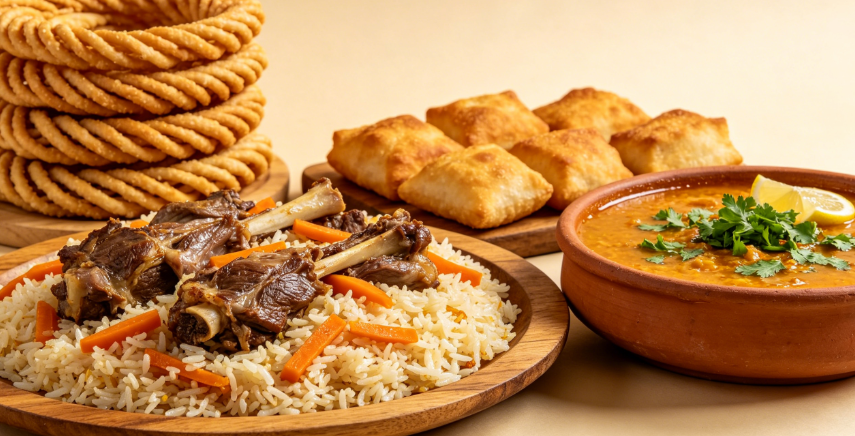
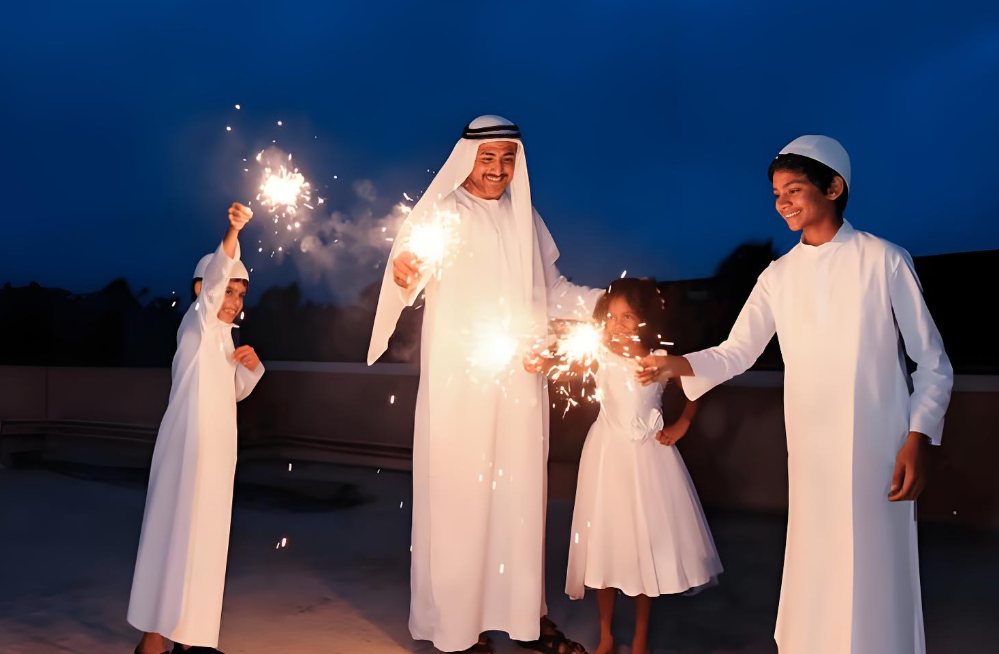
At the feast, people sit on the floor and eat with the right hand (the left hand is considered unclean), enjoying the food while catching up and exchanging good wishes, while children in new clothes play alongside; the air is full of reunion and happiness. Saudis also visit relatives and friends over the festival and exchange gifts, passing on the warmth and goodwill of the occasion.
Eid al-Adha in Saudi Arabia: what to keep in mind
Saudi Arabia is a country in which religion and state are closely intertwined, and religious belief and cultural tradition shape daily life profoundly. Especially during a sacred festival such as Eid al-Adha, visitors and outsiders alike must observe local customs and taboos strictly so as to avoid giving offence;
1. Religious and ceremonial taboos
Do not disturb religious rituals: during the festival, the Muslim prayers, worship and sacrificial rites are deeply solemn. Do not gather to watch, make noise, or take photographs or video at will, especially inside a mosque, where you should keep quiet and respect the practice of other people’s faith. Before entering a mosque, remove your shoes and dress neatly and modestly; women should cover their shoulders and knees, men should avoid shorts, and nothing in the mosque should be touched casually.
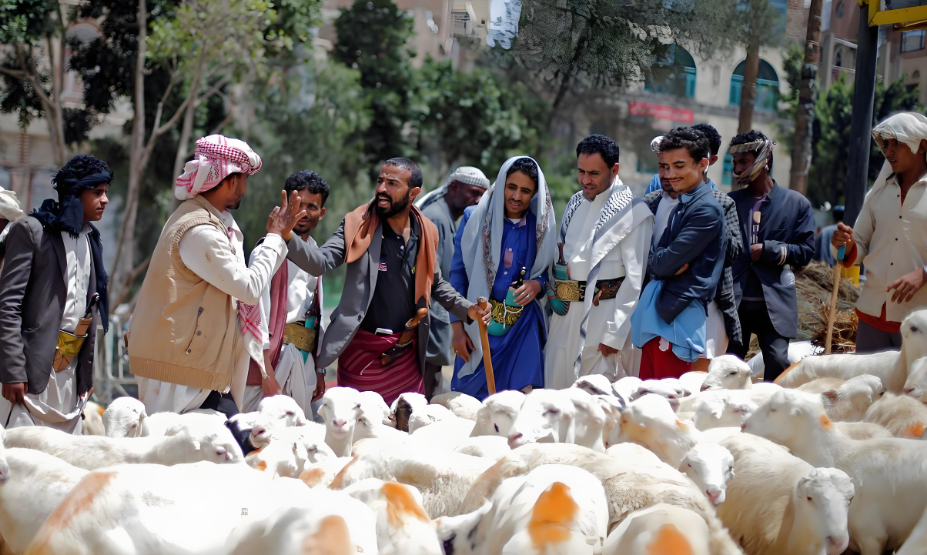
Respect the sacrifice: make no negative comments about the rite and do not approach the place of slaughter at will, so as not to cause a disturbance. The Saudi sacrifice follows strict religious rules — sharp knives are used to minimise the animal’s suffering and slaughter in front of other animals is forbidden — an expression of respect for life. Never interfere with it or question it.
Greeting etiquette: when meeting Saudis you may use the Arabic greeting “السلام عليكم” (meaning “may peace be upon you”), to which the reply is “وعليكم السلام” (meaning “and upon you be peace”); the English greeting “Eid Mubarak!” (a blessed festival) is also fine, and is the safest and most appropriate way to offer good wishes for the festival. Avoid unsuitable expressions of goodwill.
2. Dress and behaviour taboos
Dress conservatively: men and women alike should dress decently in public and avoid clothing that is revealing, tight-fitting or loudly coloured. Women are not required to wear the black abaya, but must cover the shoulders, arms and knees, and should not wear short skirts, shorts or strappy tops; men should avoid shorts and vests and keep a neat, modest appearance. This is the most basic respect for local culture.

Avoid intimate behaviour: men and women should keep their distance in public, and unrelated members of the opposite sex should avoid being alone together, embracing or shaking hands. Saudi Arabia observes strict gender segregation, and malls, restaurants and similar venues often set aside a family section for women, which visitors are expected to respect.
Behave with decorum: avoid shouting, loud laughter and horseplay in public, do not spit or drop litter, and do not drink alcohol or smoke (smoking in public is strictly forbidden). Do not bring forbidden items such as alcohol or pork products into the country or carry them in public. All of these are strictly prohibited in Saudi Arabia and may incur penalties.
3. Food and gift taboos
Dietary taboos: Saudi Arabia follows Islamic rules strictly — pork and alcohol are forbidden, and meat must be halal slaughtered. If you are invited to a family feast during the festival, never raise forbidden subjects such as pork or alcohol, and do not bring your own non-halal food. Eat with your right hand, in keeping with local custom.
Gift etiquette: if you wish to give a festival gift to a Saudi friend, choose halal food, traditional handicrafts or ornaments with Islamic patterns. Avoid alcohol, pork products, and anything bearing a cross or other religious symbol, and do not give cosmetics or clothing to women who are not relatives, so as not to cause offence. Present the gift with your right hand as a sign of respect.
4. Travel and business considerations
Travel arrangements: during Eid al-Adha the whole of Saudi Arabia takes a public holiday, usually of around four days. Malls, restaurants and government offices may shorten their hours or close, and traffic can be heavy, so plan your trip in advance and confirm the opening hours of attractions and restaurants to avoid disruption. The one to two months before the festival are also a peak purchasing season in Saudi Arabia and logistics may be delayed, so prepare ahead if you have needs in this area.

Business communication: during the festival Saudis give priority to family reunion, so avoid hard selling or chasing orders, and raise urgent business matters in advance. When talking with Saudi clients, steer clear of sensitive topics such as religious conflict and political disputes, and respect their religious beliefs and cultural traditions.
Conclusion: in sacrifice and sharing, understanding the faith and warmth of Saudi Arabia
For Saudis, Eid al-Adha has never been a simple celebration: it is faith put into practice, a family reunion and an act of goodwill. It holds the devotion of the Prophet Ibrahim, the warmth of the three shares of meat, the reverence Saudis hold for their faith and their kindness towards others, and the gentlest everyday humanity of this desert nation.
Whether you travel to Saudi Arabia to witness the sacred celebration in person or send your good wishes from afar, as long as you respect local traditions and taboos and understand this faith and warmth that has endured for a thousand years, you will feel the true appeal of Eid al-Adha.
Finally, may everyone who holds fast to their faith be treated with gentleness, and may this beauty cross mountains and seas and warm every heart ✨
Eid Mubarak to all! Wishing you a blessed and peaceful Eid al-Adha!
(Images sourced from the internet; removed on request.)