


Saudi Traditional Dress Explained: The Culture Behind the Thobe and Abaya
In the vast deserts of the Arabian Peninsula, the white robe and black cloak are far more than practical garments designed to combat the scorching heat — they are cultural codes flowing in the veins of the Saudi people. Stroll through the streets of Riyadh or Jeddah, and you will see a sea of men in white and women in black, the two colors forming Saudi Arabia’s most striking visual signature.
Yet, the sophistication of these white and black garments goes far beyond mere color. From the choice of fabric to the art of accessorizing, and from everyday cuts to ceremonial masterpieces, every detail conceals a rich story. Today, let us decode these intricacies and unveil the cultural codes woven into Saudi traditional attire.
The Male Thobe: Pure, Sacred, and Full of Subtle Details

Basic Silhouette: A Floor-Length White Garment
The traditional male attire in Saudi Arabia is the Thobe (also called “Dishdasha” in other parts of the Arab world, and commonly referred to as the “Arab robe” in China). Typically collarless, it features wide sleeves, a roomy waist, and a hem that sweeps the floor. In Saudi Arabia, pure white dominates overwhelmingly, with a straight H-line cut that gives it a crisp, clean silhouette.
Why such a strong preference for white? In Arab culture, white embodies simplicity, purity, and sanctity, symbolizing good fortune and smooth sailing in all endeavors. That is why on holidays, happy occasions, or during major events, men invariably dress in white Thobes.
A seemingly simple white Thobe actually conceals many subtle craftsmanship details. The collar retains a classic double-layered triangular gusset design, detachable to accommodate temperature shifts. A vertical placket runs down the chest, fastened with four or five buttons, while three pockets are worked into the robe — two of them cleverly hidden at the sides of the hips. A good Thobe ranges from 100 to 600 Saudi Riyals (approximately 190 to 1,150 RMB), and most Saudi men prefer to have theirs tailor-made.
Headscarf (Ghutra / Shemagh): A Calling Card on the Head
If the white Thobe is the Saudi man’s formal suit, then the headscarf is its soul. Over the Thobe, Saudi men usually wear a square piece of cloth on the head, folded into a triangle and held in place with a black circular headband.


There are two main styles: the pure white Ghutra and the red-and-white checkered Shemagh. The Ghutra is most commonly seen at solemn, grand occasions such as weddings and pilgrimages, projecting an air of dignity and reverence. The Shemagh, on the other hand, is closer to Bedouin tradition and enjoys wide popularity in daily life. Interestingly, the red-and-white checkered headscarf is not actually native to Saudi Arabia — it is said to have originated in London and only made its way into the country about fifty years ago, yet it swiftly captured the hearts of Saudi men.
Headband (Igal): From Camel Hobble to Crown of the Head

The black cord used to secure the headscarf is called the Igal. One legend, steeped in Bedouin life, traces its origin back to a rope used to hobble a camel’s forelegs and keep it from wandering off. For convenience, herders would loop this rope around their heads while riding or grazing the animals. Over time, it evolved into an indispensable ceremonial crown.
In formal Saudi settings, the Ghutra paired with an Igal is an absolute must. The Saudi government even stipulates that entering government institutions requires the full Thobe and headscarf. Appearing in public wearing only the inner layer of the robe is considered a violation of public decency laws.
Cloak (Bisht): The Ceremonial Touch
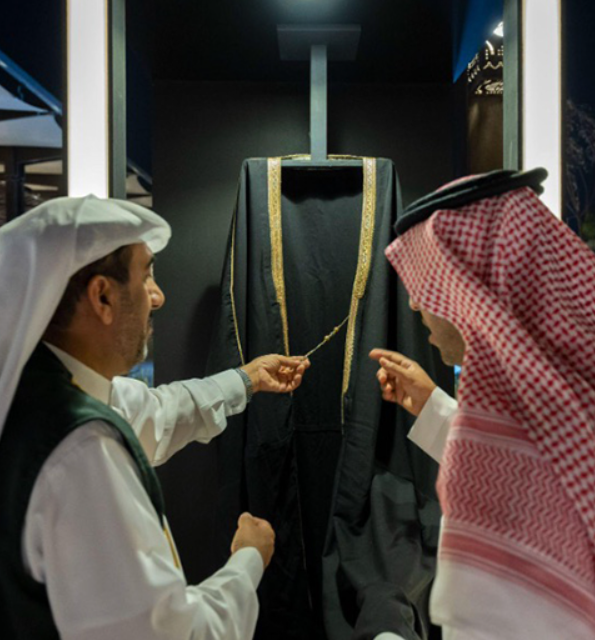
If a Saudi man attends a wedding, a grand celebration, or a royal audience, you will very likely see him wearing a gold-trimmed outer cloak over his Thobe — this is the Bisht. The Bisht represents the highest standard of Saudi male attire, usually made of wool or camel hair, with lighter silk versions available for summer. Gold trimming is the most classic, though white and silver versions also exist.
The Female Black Abaya: A Kaleidoscope Beneath the Mystery
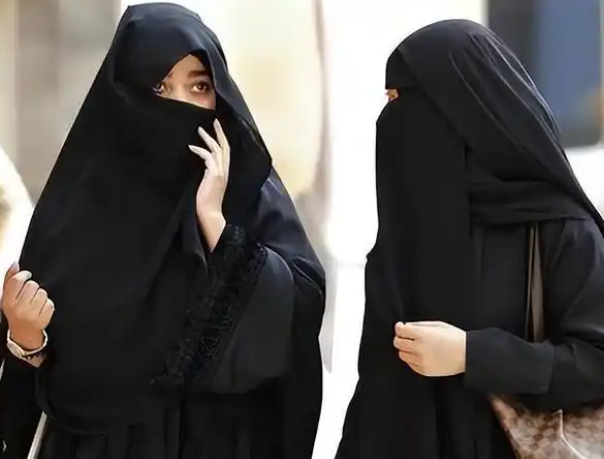
Abaya: More Than a Black Robe
When Saudi women go out, they traditionally wear a loose black robe over their everyday clothes called the Abaya. Falling from the shoulders to the ankles, it is light and flowing, concealing the silhouette of the body.
In Saudi Arabia, the Abaya is not legally mandated — women may choose any modest attire when going out. Yet, for the vast majority of traditional Saudis, this dress code signifies “protection” and “inviolability,” carrying deep cultural identity and religious conviction. Islam emphasizes modesty and dignity, and the black robe is an outward embodiment of that principle — it conceals the body’s curves, preserving a woman’s beauty for her family and close kin rather than for strangers in public spaces.
The Three Realms of Veiling: Hijab, Niqab, Burqa
The way Saudi women cover their faces varies according to region, family tradition, and personal choice, falling roughly into three categories:
Hijab: Covers the hair and neck but leaves the entire face visible. This is the most common and everyday choice.

Niqab: Covers the entire face, leaving only a narrow slit for the eyes. This is a more traditional form of veiling in Saudi Arabia, especially prevalent in inland cities like Riyadh.
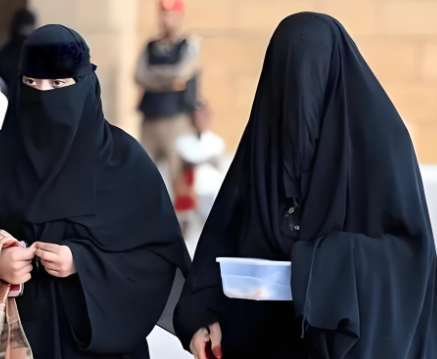
Burqa: Even the eyes are concealed behind a mesh panel. In Saudi Arabia, this style is mainly worn by the older generation of women and has become far less common among the youth.
One observer who lived in Saudi Arabia described it this way: “They are clad in black robes and headscarves, some even wearing face veils, with only their eyes visible. Their attire is not merely a religious or cultural symbol, but also an embodiment of social norms and constraints.”
The “Colorful Robe” Beneath the “Black Robe”
Many foreigners hold a major misconception about the Saudi woman’s “black robe” — that she wears only that one black garment all year round. In reality, the black robe is simply the outer layer.
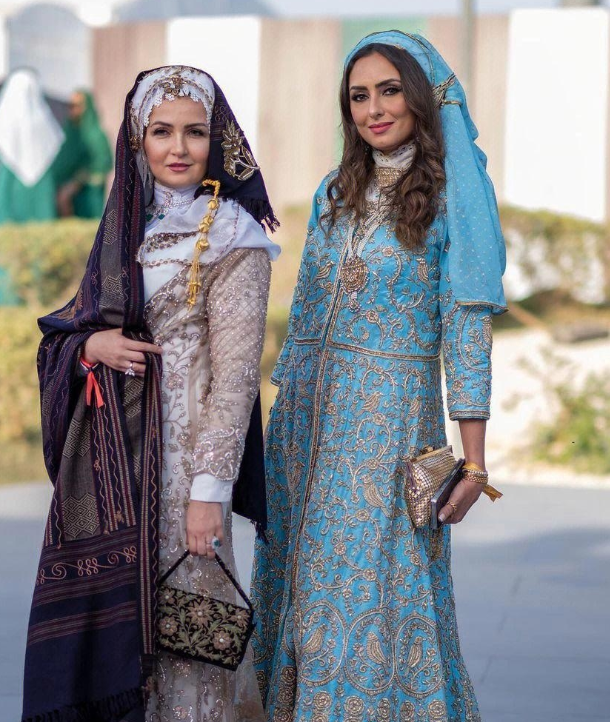
Underneath the Abaya, Saudi women’s everyday clothing is colorful and diverse — especially at women-only occasions like weddings and family gatherings, where they take off the Abaya to reveal carefully coordinated, resplendent gowns and haute couture dresses. In the Mecca region, there is a traditional female robe called Al-Masdah, made of silk and embroidered with gold thread; in Medina, the Al-Kurta is a fitted dress whose colors change with age — older women wear subtle light hues, while younger women don bright silks. As a Saudi saying goes, “The black robe covers the body, but it cannot hide one’s taste.” Today, many Saudi women pay extreme attention to the cut, fabric, and embroidery of the Abaya itself, as well as to matching shoes, bags, and accessories. The Abaya has long since grown into a fashion industry with a market worth hundreds of billions.
Tradition and Transformation: A Story Unfolding Now
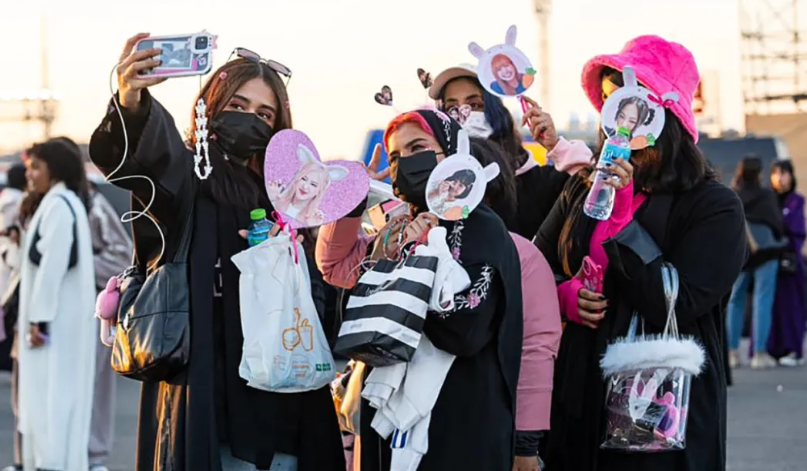
In recent years, Saudi traditional attire has been undergoing subtle transformations. Young designers in Riyadh have started introducing slightly waist-tailored versions of the Thobe, preserving the traditional form while infusing a modern aesthetic. On the women’s side, although the black Abaya remains mainstream, restrictions on its color have loosened somewhat. Many young women have begun adding embroidery, lace, rhinestones, and other elements to the black robe, and some even boldly experiment with non-traditional colors like dark blue, gray, and beige.
For foreign tourists, since 2019, Saudi Arabia no longer requires female visitors to wear the Abaya and headscarf, though it does require modest attire that covers the shoulders and knees. This means you can explore the country dressed appropriately without needing to “do as the locals do” from head to toe.
The white Thobe and the black Abaya have never been merely combinations of fabric and thread. They are the survival wisdom of a desert people, an outward expression of Islamic culture, a distinct marker of identity, and — even more — a spiritual anchor holding fast to tradition amid the tides of modernization.
The next time you see a Saudi man in a white robe or a Saudi woman in a black one, I hope you will be able to look beyond this stark black-and-white contrast and glimpse the richly layered, profoundly meaningful cultural universe that lies behind it.
(Images sourced from the internet; removed upon request.)